
No source visibility
Track where applicants originate so teams can understand channel performance.
HiringCat helps teams understand applicants, stages, sources, screening outcomes, and bottlenecks without building a reporting spreadsheet.
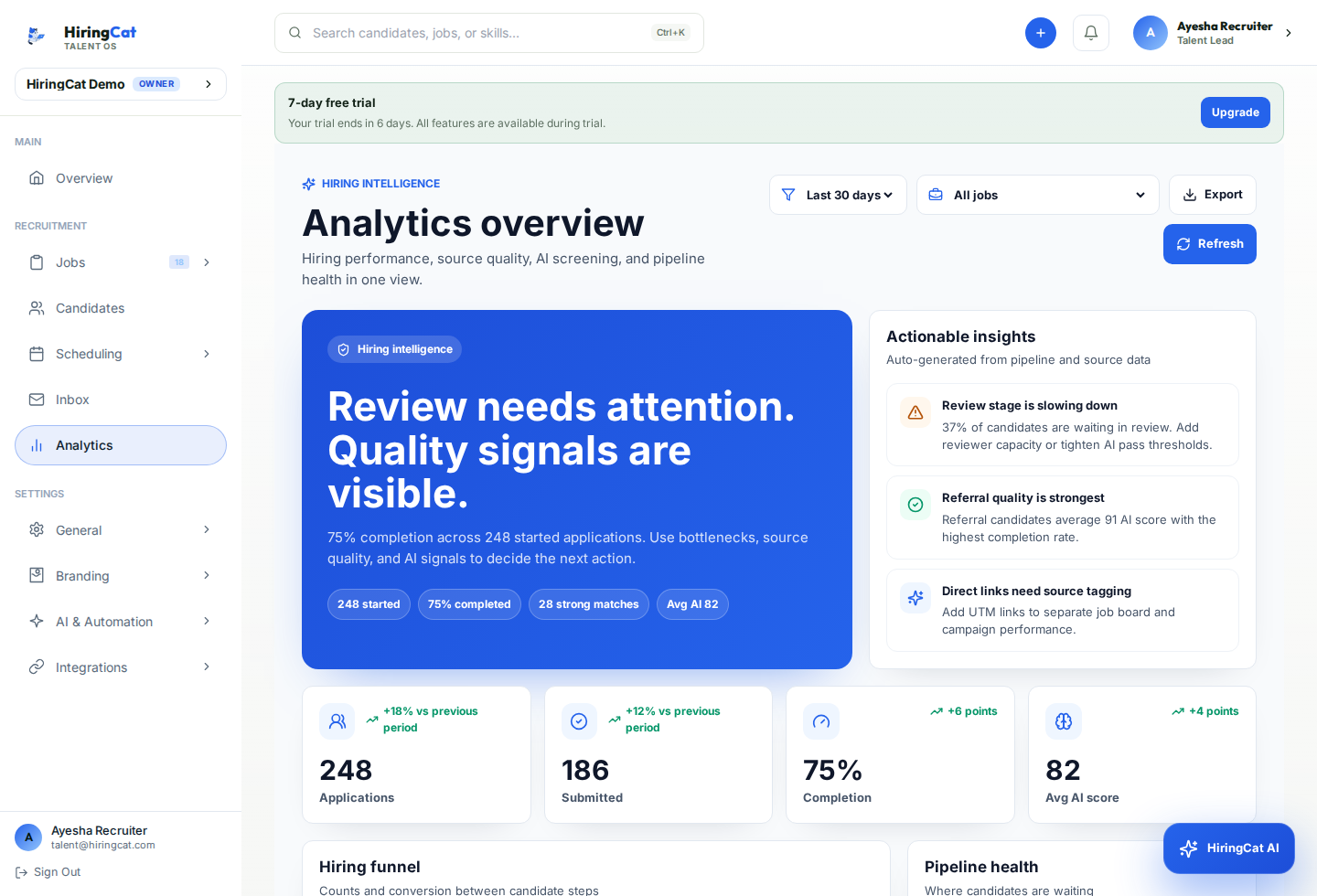
Teams need to know where candidates come from, where they stall, and which roles need attention.
Track where applicants originate so teams can understand channel performance.

See how many candidates sit in applied, screening, interview, and offer stages.

Connect AI screening and candidate movement to the broader hiring funnel.
Reports are useful when they reflect the same jobs, candidates, and stages recruiters use every day.
Candidate and job workflows create the data behind the funnel.
See how candidates progress from applied through interviews and offers.
Use trends to improve sources, screening criteria, and follow-up speed.
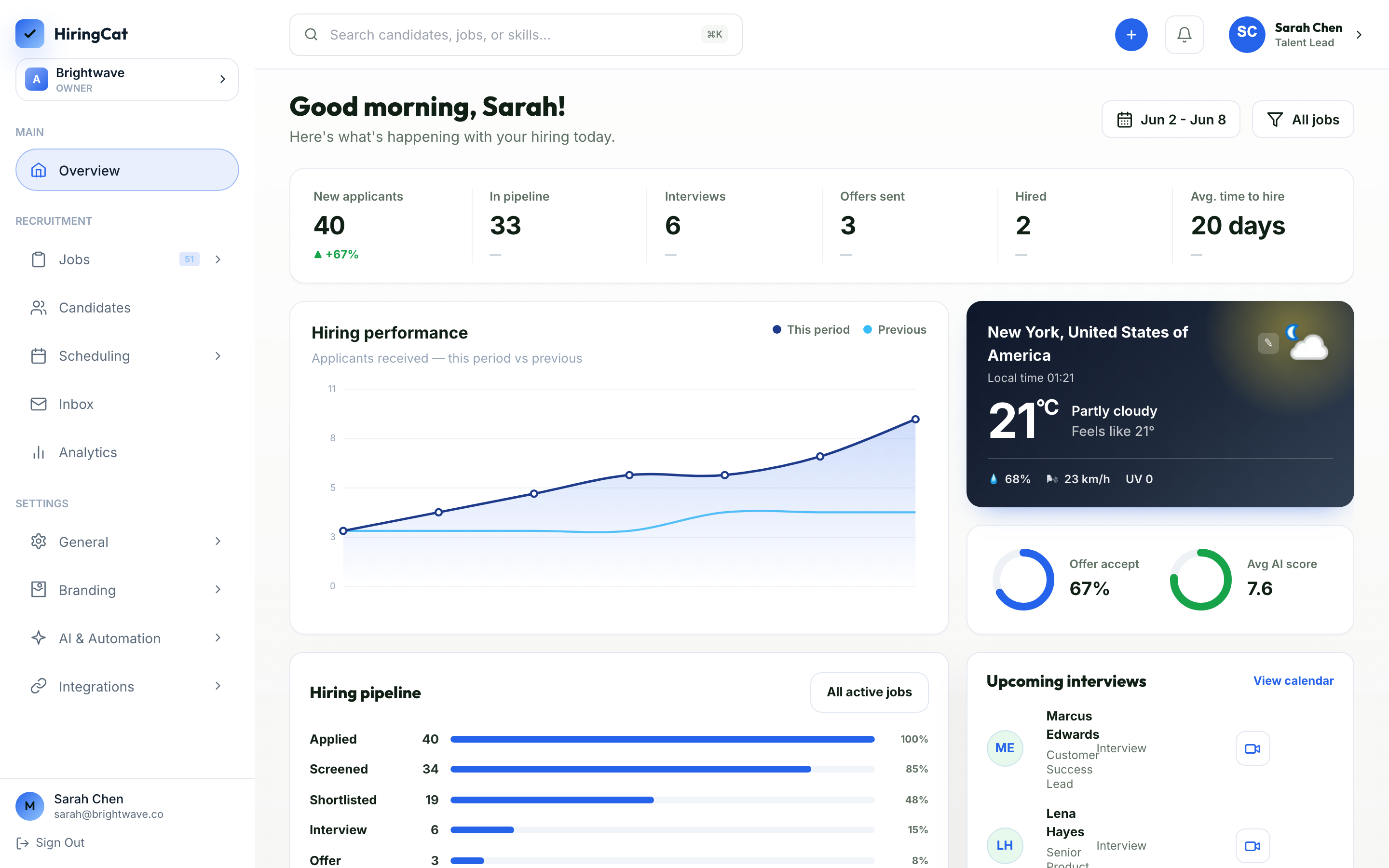
HiringCat focuses on operational visibility, not vanity reporting.
Understand candidate counts and stage movement across roles.
See active jobs and candidate status without opening every job individually.

Use analytics alongside automations and workflows to reduce manual follow-up.
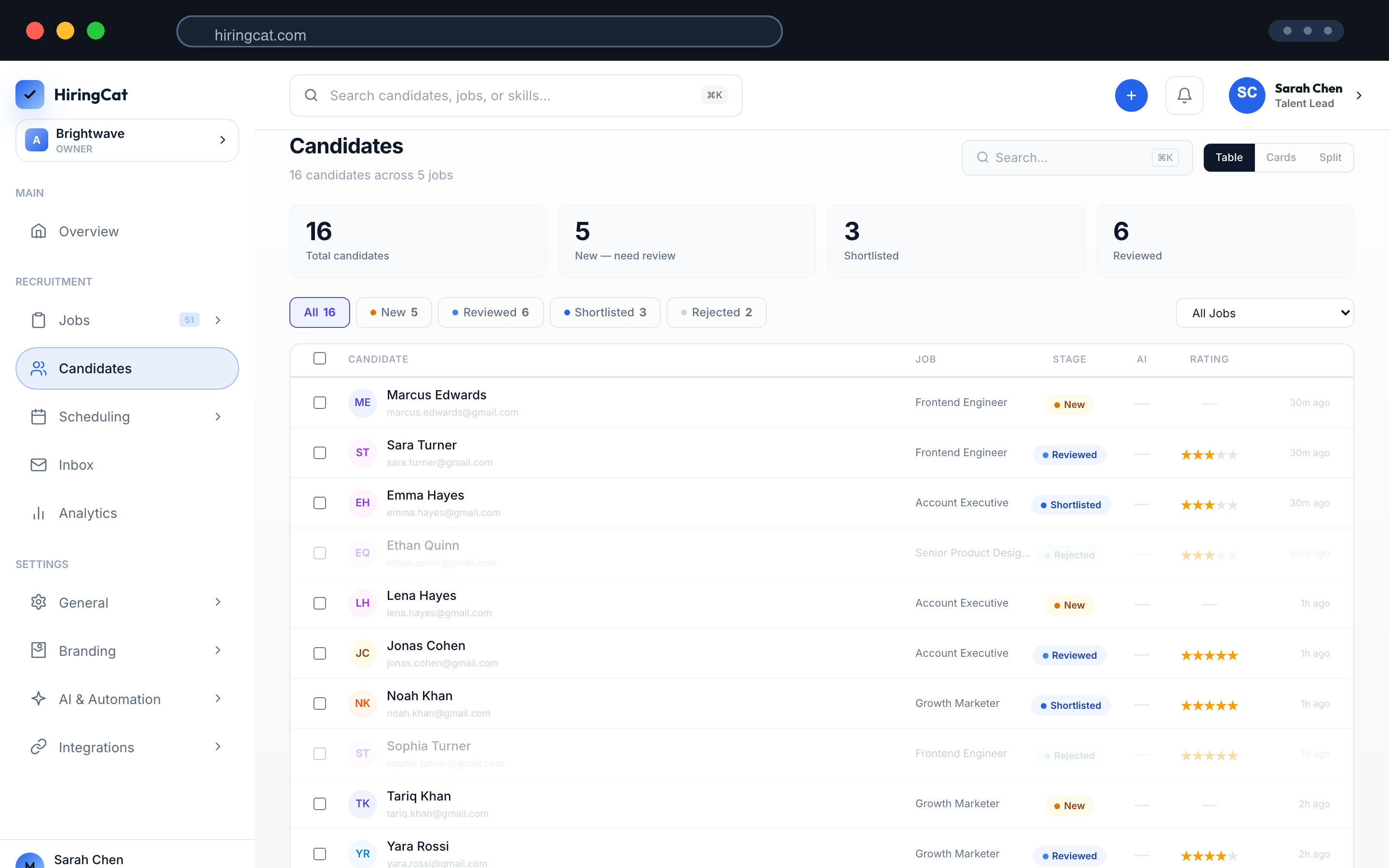
The point of analytics is to help the team decide what to do next.
Spot jobs with too many unreviewed candidates or slow progress.
Compare applicant flow against candidate movement and outcomes.
Use one dashboard view for activity instead of manual status updates.
Analytics works best when connected to candidates, automation, and source tracking.
Teams can track applicant counts, stages, sources, screening context, and workflow movement.
Yes. Reporting is based on HiringCat jobs, candidates, and workflow activity.
Source and stage visibility can help teams understand which channels produce useful applicants.
Use HiringCat analytics to understand the funnel and improve the next hiring step.